How to Negotiate a Job Offer in 2026 — Salary, Signing Bonus and the Rest
 Ashu
- 14 Nov, 2026
- · 9 min read

In this guide
The first offer is rarely the last — and the negotiation window closes the moment you accept. Most employers expect you to negotiate: the opening number is usually the bottom of an approved range. Yet most people say yes on the spot, afraid the offer will vanish if they pause. It almost never does. This guide is a script: what to say, what to ask for besides salary, and what never to say. All figures checked 14 November 2026.
Photo: A handshake should come after the terms are agreed — not before. (Photo: Pexels)
What You Will Learn
- How to buy 2–3 business days to decide
- How to price the whole package, not just salary
- Your market rate for your role and city, from the BLS
- The four-sentence script — and the pause
- The $5,000 raise vs signing bonus worked example
- What never to say, and how to spot a fake offer
Step 1: Get the offer in writing — and ask for 2–3 business days
What to do: When the offer comes, thank them, ask for it in writing, and ask for 2–3 business days to decide. Never accept on the spot.
How: The recruiter names a salary and asks, “Does that work for you?” Say: “Thank you — I’m excited about the role. Could you send the full offer in writing, including benefits and start date? I’d like 2–3 business days to review it.” No real employer withdraws an offer for that. Negotiate against the written offer: salary, bonus, start date, remote days, PTO, equity, title and review date. Verbal promises do not count — if it is not in the letter, it does not exist.
Example: Maya gets a verbal offer of $75,000 on Tuesday, asks for the letter, and replies Friday — after finding the market range is $78,000–$85,000.
Common mistake: Accepting on the call — the offer will still be there on Friday.
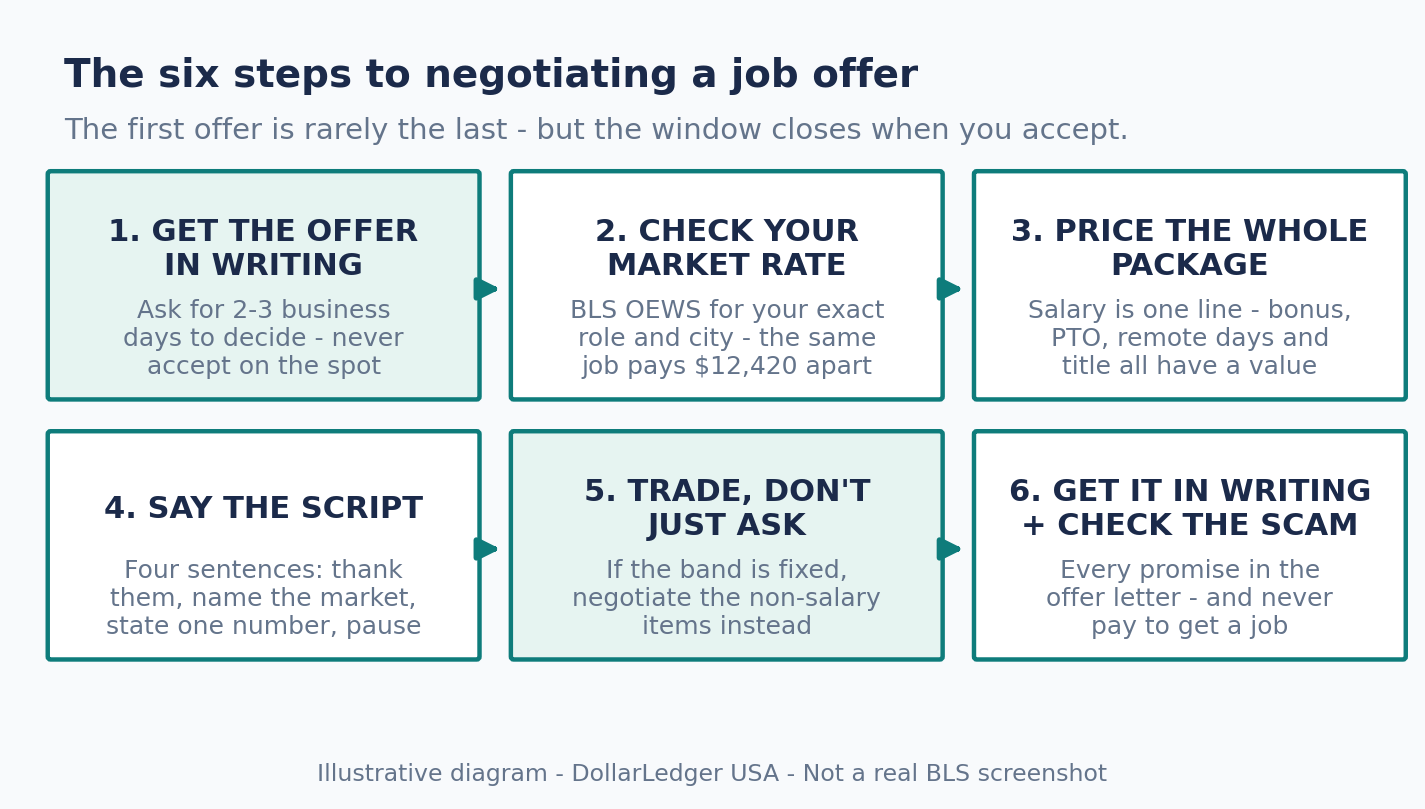
Illustrative diagram - The six steps to negotiating a job offer. NOT a real BLS screenshot.
Step 2: Price the whole package — salary is only one line
What to do: Before you name a number, list everything negotiable besides base pay — and put a dollar value on each line.
How: Seven items are on the table. Signing bonus: a one-time payment, often $2,000–$10,000 for mid-level roles. Start date: a later start can be worth money. Remote or hybrid days: two days a week at home saves commuting and lunches. Paid time off: five extra days are not a perk, they are pay — at $75,000, one day is worth $288.46 (salary divided by 260 working days), so five days are worth $1,442.31 a year, every year. Equity or RSUs: stock vesting over years. Title: a better title raises your market rate next time. Review timeline: a written 6-month raise review beats a vague “we’ll revisit it.” If the salary band is fixed, negotiate these lines instead.
Example: Two offers at $75,000 are not equal: one adds a $5,000 bonus and five PTO days — $6,442.31 in year one.
Common mistake: Negotiating only salary, then finding the PTO, start date and review were negotiable too — after signing.
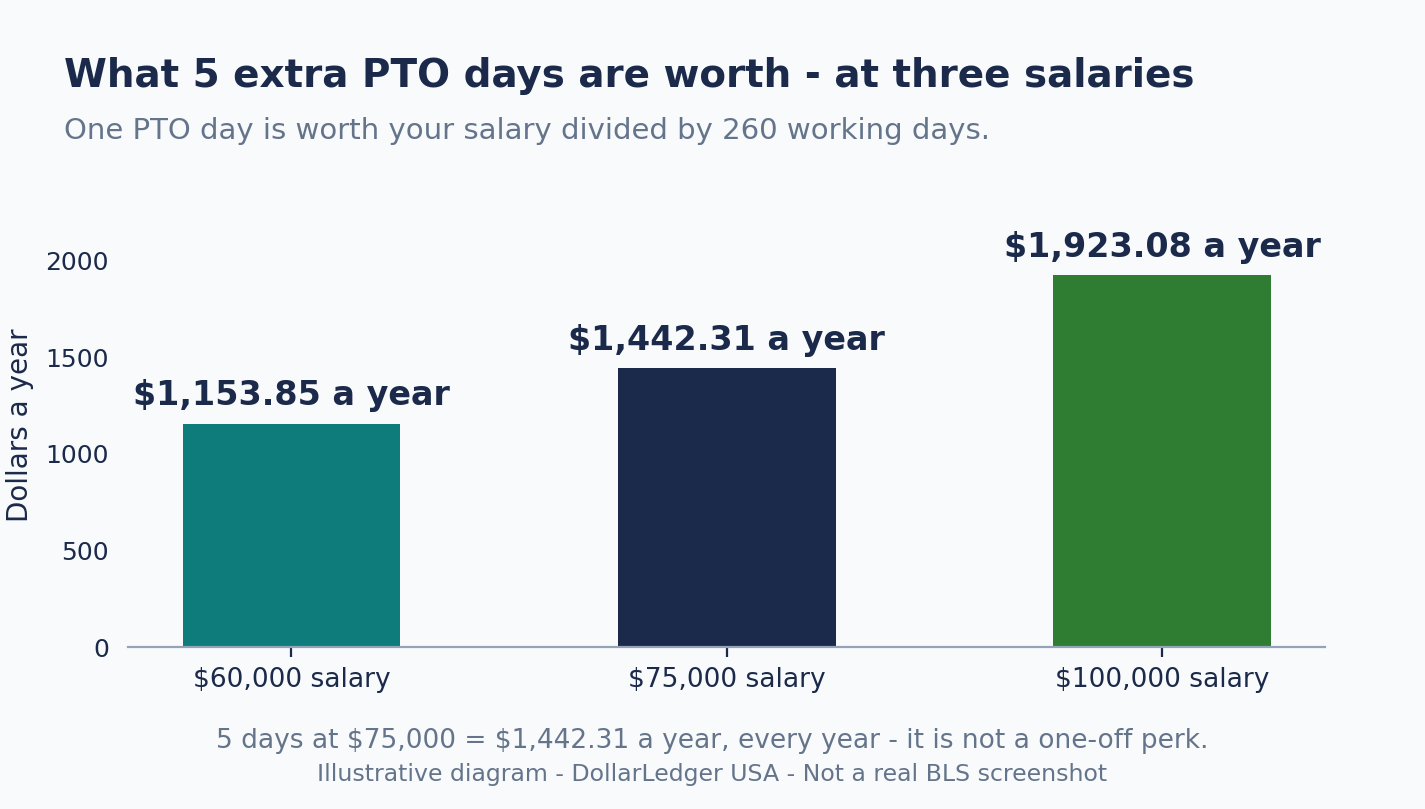
Illustrative diagram - Five extra PTO days are real money, every year. NOT a real BLS screenshot.

Photo: The interview went well — now the numbers do the talking. (Photo: Pexels)
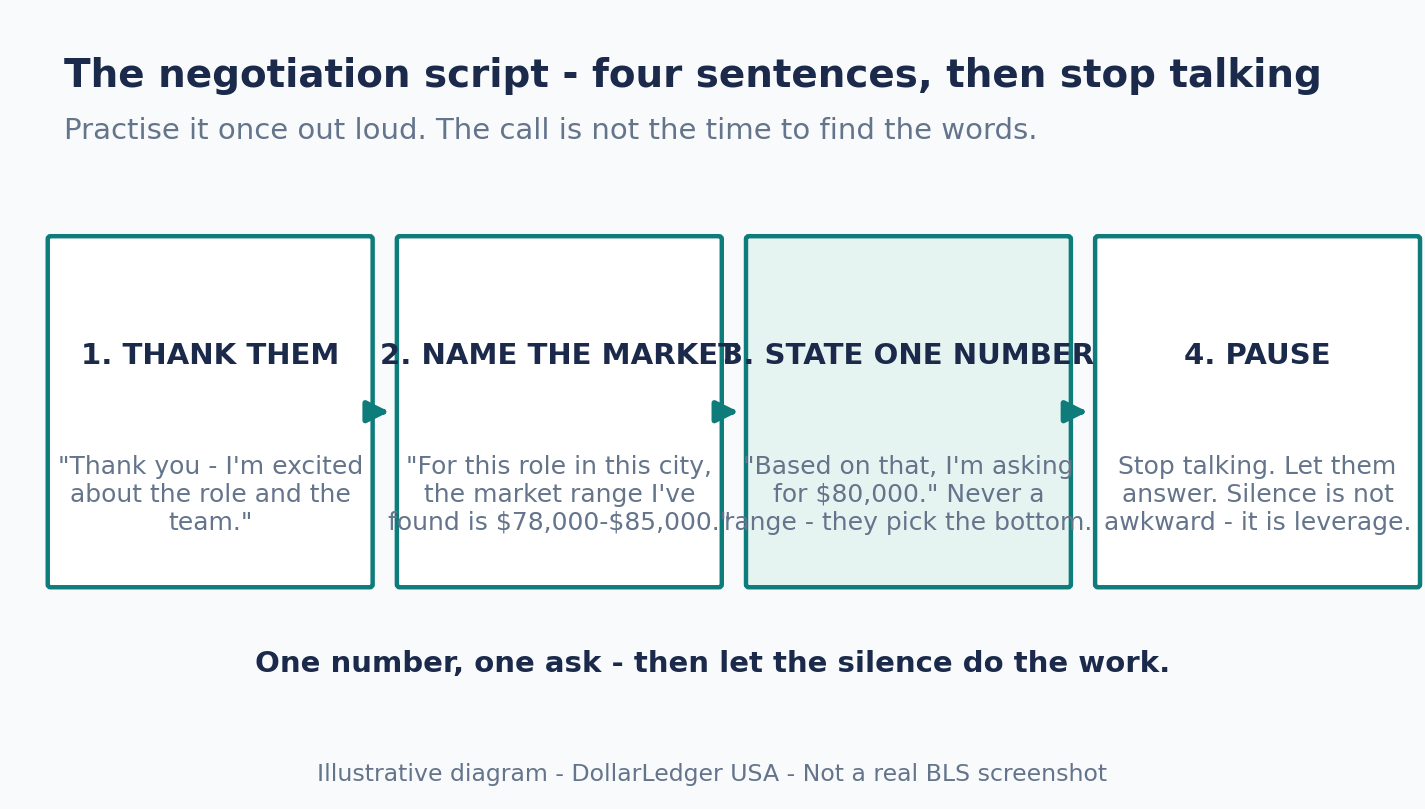
Illustrative diagram - The script: four sentences, then stop talking. NOT a real employer screenshot.
Step 3: Check your market rate — your exact role, your exact city
What to do: Find what employers actually pay for your title, in your city, at your level — before you name your number.
How: Start with the Bureau of Labor Statistics’ Occupational Employment and Wage Statistics (OEWS): employer-surveyed pay for about 830 occupations, nationally and by state and metro area — the May 2025 estimates are the latest. The city matters: for customer service representatives, the BLS OEWS May 2025 national median is $44,770, but the mean is $49,100 in Philadelphia, $52,960 in Minneapolis and $40,540 in Columbia, South Carolina — the same job, $12,420 apart. Across all US jobs, the nationwide mean was $33.54 an hour in May 2025, about $69,763 a year full-time. Cross-check with live postings for your title and city, and salary sites such as Glassdoor or Payscale, filtered by city and level. One number from one site is weak; a range from three is a case.
Example: Priya is offered $68,000 in Austin; the BLS range and three postings put her role at $72,000–$80,000.
Common mistake: Quoting a national average or a senior title. One wrong number undermines the case.
Step 4: Say the script — four sentences, then stop talking
What to do: Memorise four sentences: the thanks, the market, the number, the pause.
How: One, thank them: “Thank you — I’m excited about the role and the team.” Two, name the market: “For this role in this city, the market range I’ve found is $78,000 to $85,000.” Three, state one number — never a range, because the employer will pick the bottom: “Based on that, I’m asking for $80,000.” Four is silence: stop talking and let them answer. People who keep talking after the ask talk their own number down. If they say “let me check”, agree a date and send a short summary the same day.
Example: Ana’s offer was $75,000, her ask $80,000. The recruiter said the band topped out at $78,000. She paused and asked what else could move — and left with $78,000 plus a $3,000 bonus and five extra PTO days.
Common mistake: Apologising, or listing every reason you deserve more. One range and one number beats ten reasons.
Step 5: Trade, don’t just ask — the $5,000 raise vs bonus worked example
What to do: When the salary will not move further, compare the trade on paper — a raise repeats every year, a bonus happens once.
How: Take a $75,000 offer. Option A: a $5,000 raise to $80,000 — $416.67 a month, $192.31 per biweekly paycheck, before tax. It repeats: $15,000 over three years, about $15,531 if the average 3.5% merit rise reported by Mercer applies. Option B: keep $75,000, take a $5,000 bonus plus five PTO days. Year one B wins: $5,000 plus $1,442.31 of PTO is $6,442.31, against A’s $5,000. Over three years B is $9,326.92; A is $15,000. The bonus feels bigger on day one; the raise wins over time because it pays every year and lifts every future raise.
Example: Two candidates take the same $75,000 offer: one takes the $5,000 raise, the other the bonus plus PTO. After three years the first is $5,673.08 ahead.
Common mistake: Taking the bonus because $5,000 today feels bigger than $416.67 a month. Do the three-year maths first.
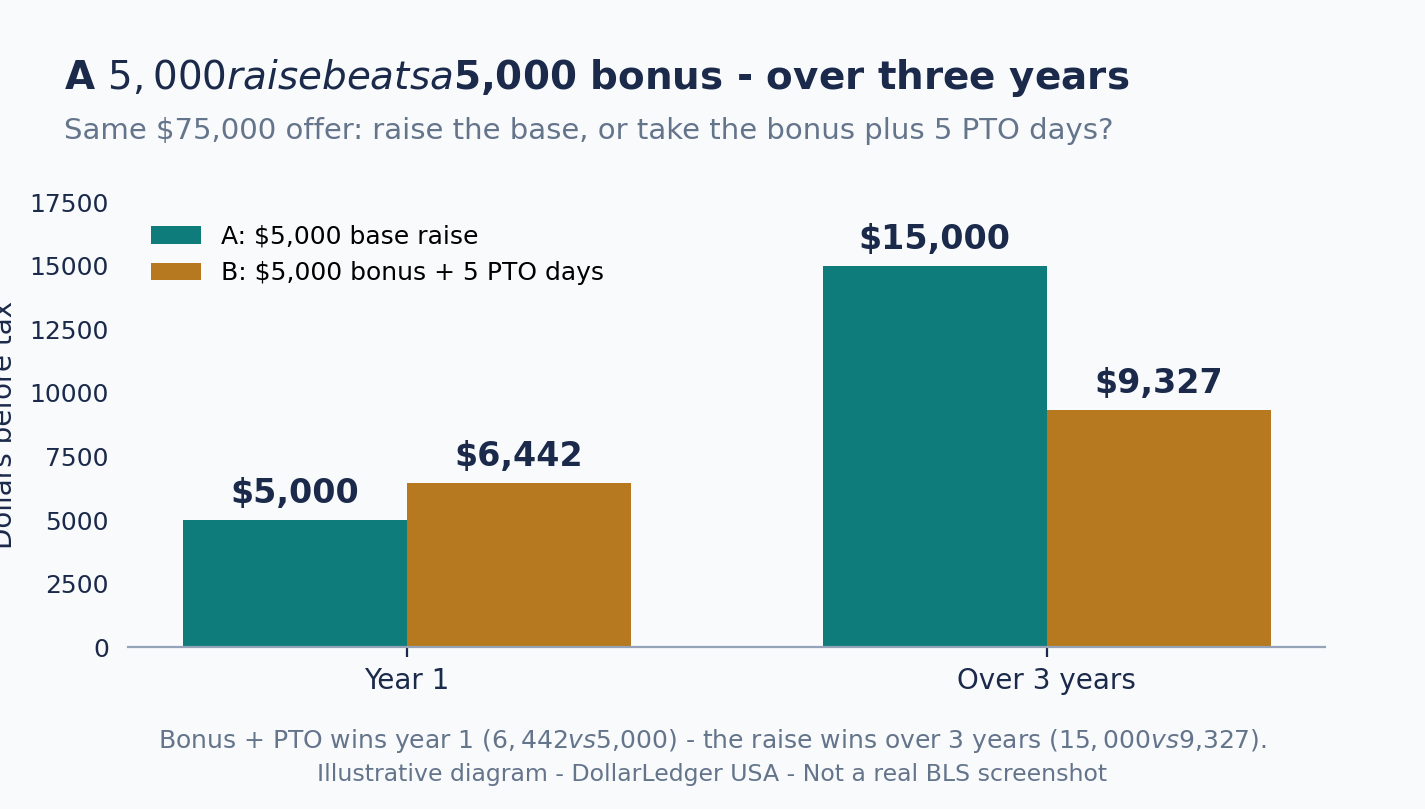
Illustrative diagram - The bonus wins year one; the raise wins over three years. NOT a real BLS screenshot.
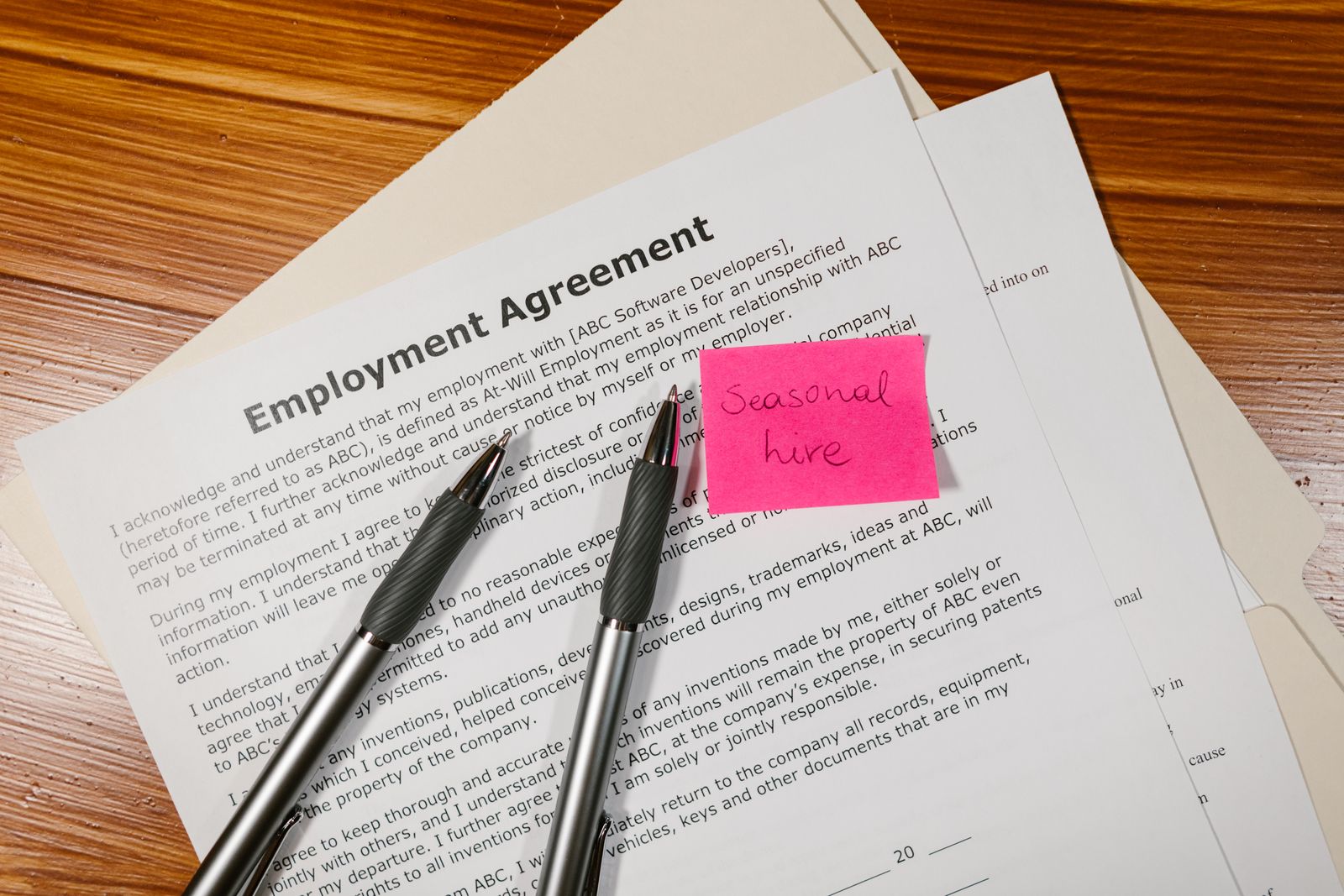
Photo: Read the written offer line by line before you sign anything. (Photo: Pexels)
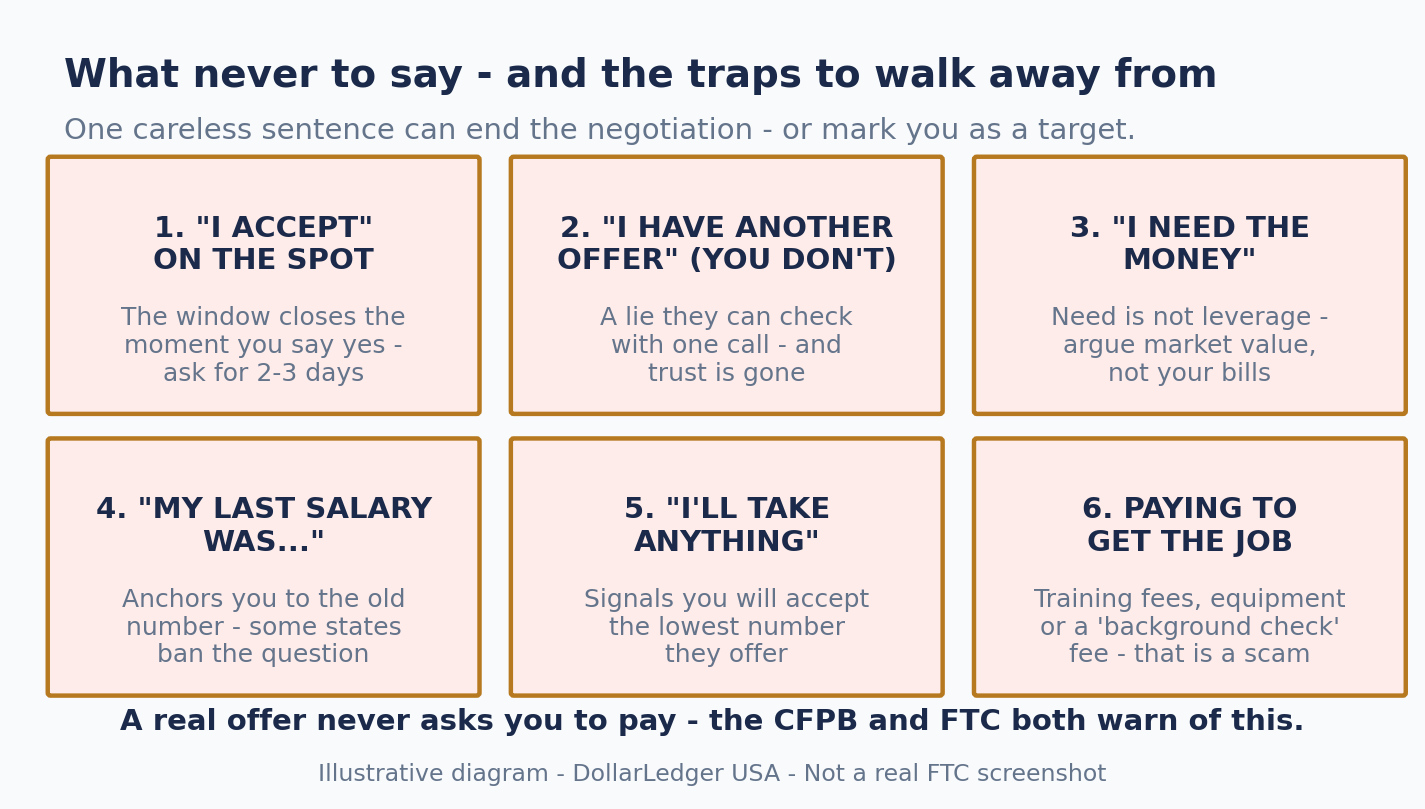
Illustrative diagram - Six sentences and traps that end a negotiation. NOT a real FTC screenshot.
Step 6: Get it in writing — and check the offer is real
What to do: Get every agreed term in the offer letter before you sign, and run a scam check on the offer itself.
How: The letter should list salary, bonus and when it is paid, start date, remote days, PTO, equity and the review date — anything missing is not agreed. Check the bonus is not repayable if you leave early. Then verify the offer is genuine. A real employer never asks you to pay for a job — no fee for training, equipment, a background check or a “placement” — and the CFPB warns that pressure to act right away is a classic warning sign of a scam. The FTC agrees: honest employers never ask you to pay to get a job, and never send a check to deposit and send part back. Check the recruiter’s email is on the company domain, the job is on the careers page, and search the company name with “scam” or “review”. Already employed? Asking for more where you are is different — see how to ask for a raise in 2026. If the offer came from a remote listing you never applied to, check finding a legitimate remote job first.
Example: Ben’s “offer” arrived by text from a Gmail address, asking $200 for a background check. The careers page showed no such job — he reported it.
Common mistake: Signing without reading, then finding the bonus, remote days or review were never written down.
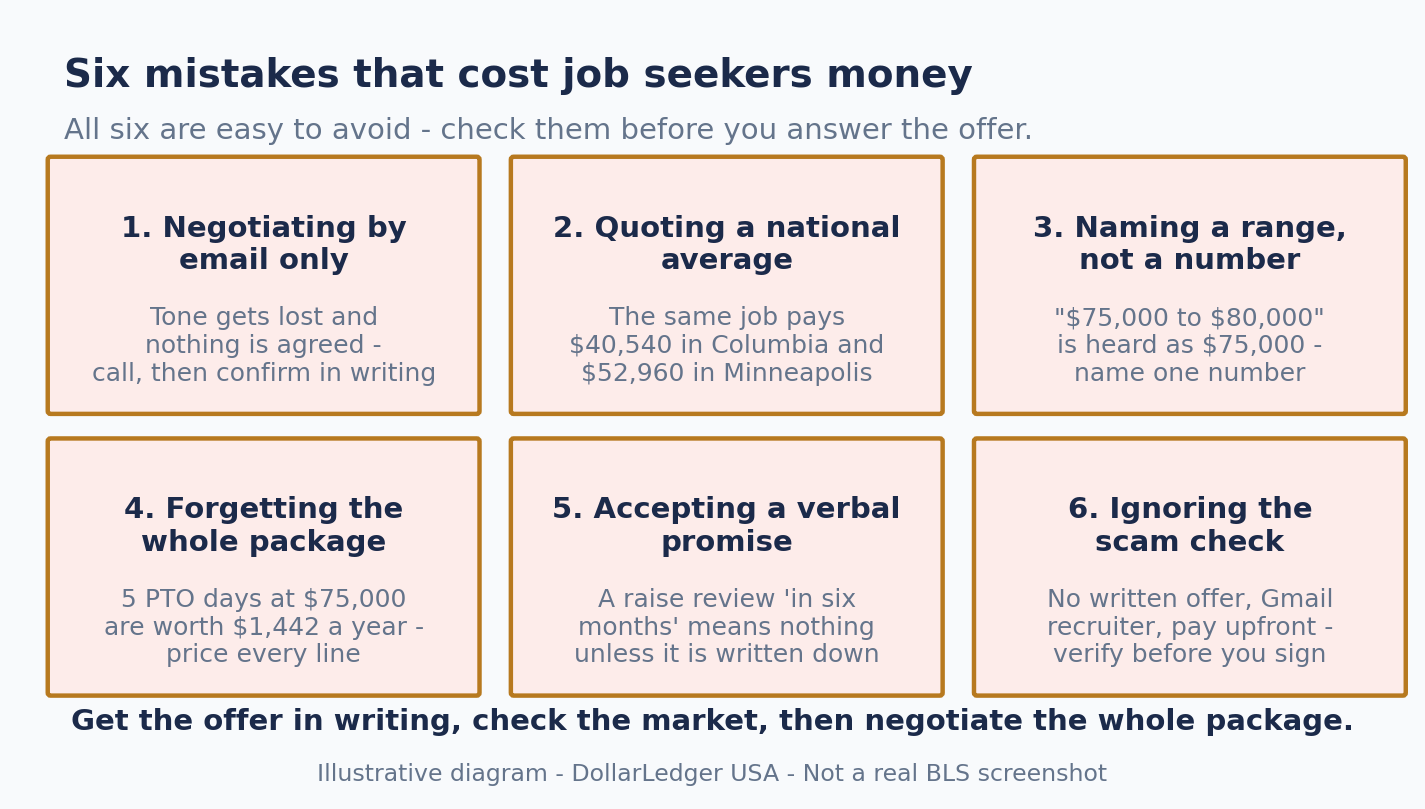
Illustrative diagram - Six mistakes that cost job seekers money. NOT a real BLS screenshot.
Checklist
- Offer in writing, with 2–3 business days to decide.
- Market range checked for my role and city (BLS OEWS + postings).
- Whole package priced — bonus, PTO, remote days, equity, title, review date.
- One ask number ready — not a range.
- Four-sentence script practised once out loud.
- Three-year maths done on raise vs bonus.
- Every agreed term in the offer letter before signing.
- Scam check run — company domain, careers page, no payment asked.
FAQ
Should I negotiate a job offer, or just accept it?
Negotiate — politely, once, with a number. Employers expect it, and the first offer is usually the bottom of an approved range.
What if they say the salary band is fixed?
Negotiate the rest: a signing bonus, five extra PTO days (worth $1,442.31 a year at $75,000), remote days, a better title, or a written 6-month raise review.
Is a signing bonus or a raise better?
Over one year the bonus can win; over three years the raise usually wins. A $5,000 raise is $15,000 over three years; a $5,000 bonus plus five PTO days is $9,326.92.
How do I know if a job offer is a scam?
A real offer never asks you to pay. Pressure to act right away is a CFPB warning sign, and the FTC says honest employers never ask you to pay. Verify the recruiter’s domain and the careers page.
Sources
- U.S. Bureau of Labor Statistics, Occupational Employment and Wage Statistics (OEWS) (opened live 14 November 2026): https://www.bls.gov/oes/
- Consumer Financial Protection Bureau, warning signs of fraud and scams (opened live 14 November 2026): https://www.consumerfinance.gov/ask-cfpb/what-are-some-classic-warning-signs-of-possible-fraud-and-scams-en-2094/
- Federal Trade Commission, Job Scams (opened live 14 November 2026): https://consumer.ftc.gov/articles/job-scams
All figures checked 14 November 2026 against the BLS, the CFPB and the FTC.
Disclaimer: For education only, not career, financial or legal advice.